

The Complete Off-Road Modifier's Guide: How To Build The Perfect 4x4
There's a moment every 4x4 owner knows: you're parked next to a fully modded rig at the trailhead, and suddenly your factory bumper feels very inadequate. Whether you drive a Jeep Wrangler, a Ford Bronco, a Toyota Tacoma, or any serious off-road vehicle, this guide walks you through the entire 4x4 modification journey — what to buy first, what to skip, and how to make smart decisions that improve both performance and resale value.
Why modify? understanding the off-road mindset
Stock vehicles are built for compromise. Manufacturers balance ride comfort, fuel economy, cost, and safety — which means trail capability is rarely prioritized. Aftermarket accessories let you tilt that balance toward what you actually care about: ground clearance, approach angles, cargo capacity, lighting, and protection.
The off-road modifier's mindset is not about spending the most money. It's about spending strategically — buying the right off-road parts for your specific terrain, use case, and budget. A weekend overlander in Colorado has different needs than a daily driver who occasionally hits fire roads. Know your mission before you open your wallet.
The modification hierarchy: where to start
Not all mods are created equal. Experienced builders follow a rough priority order — functional before cosmetic, safety before style. Here's how the progression typically looks:
Exterior protection
Front bumpers, rear bumpers, skid plates, fender flares — protect your investment first. These guard the most vulnerable panels and set the foundation for every subsequent upgrade.
Access & ergonomics
Side steps, running boards, grab handles — essential once you're lifted. They protect rocker panels and make daily loading genuinely painless.
Cargo & storage
Roof racks, bed racks, tailgate accessories — maximize your trail capacity and keep the cab clutter-free on technical terrain.
Lighting
LED light bars, upgraded headlights, spotlights — night off-road without proper lighting is a fundamentally different and far more dangerous experience.
Suspension & lift
Lift kits, upgraded shocks — highest commitment modification. Do this after you've clarified your use case and tire goals.
Front bumpers: the most important single upgrade
If you only do one modification, make it the front bumper. The factory bumper on most trucks and SUVs is plastic-heavy, low-clearance, and designed to crumple — not to push brush, mount a winch, or take a rock hit. A quality steel off-road bumper transforms your approach angle, adds mount points for lights and recovery gear, and signals that you're serious about where you drive.
When selecting a front bumper for Jeep or Ford Bronco front bumper, look for: full-width vs. stubby profile, integrated winch mounts, D-ring shackle points, and vehicle-specific fitment. MAIKER's aftermarket bumpers bolt directly to factory mounting points with zero drilling required — sensor holes are available as an option to retain OEM parking sensor function.
Material matters. Steel is heavier but more resistant to impact deformation. Aluminum saves weight but can crack under hard rock contact. For most overlanders, steel front bumpers paired with aluminum roof racks is the optimal combination.
Recommended products


Side steps & running boards: access plus armor
Side steps and running boards for trucks serve a genuine functional role — especially once your rig is lifted. A solid step system protects the rocker panels (some of the most expensive body panels to repair), keeps mud off your seat when you climb in, and makes regular loading far less exhausting.
The three main categories are: tube steps (round or oval, minimal ground clearance obstruction), rock sliders (full rocker protection, can be used as a hi-lift jack point), and nerf bars (wider platform, better for passengers). MAIKER's stainless steel running boards are designed for specific vehicle models and include all mounting hardware — avoiding the fit issues that plague universal-fit alternatives.
Recommended products


Roof racks: the overlander's best friend
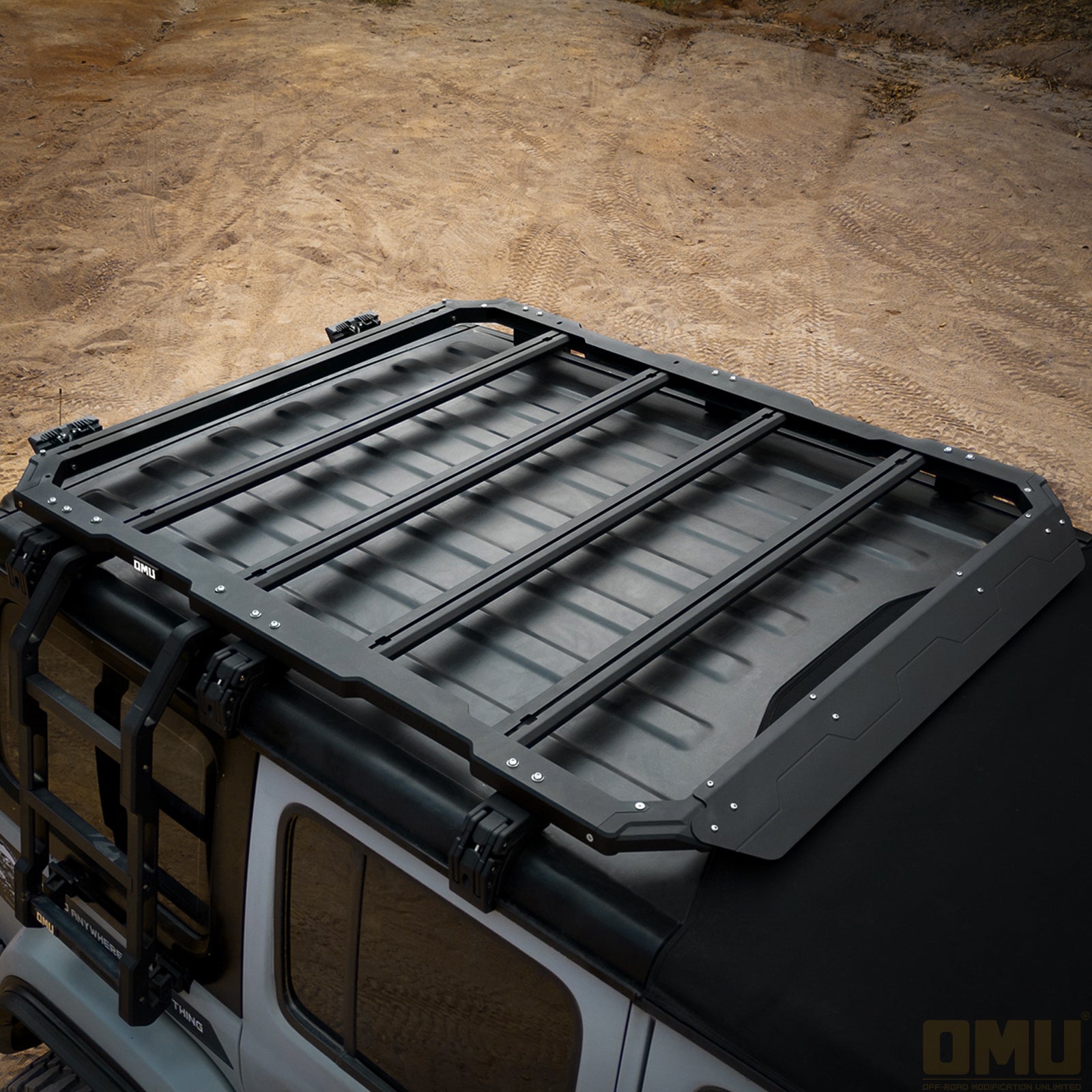
A roof rack unlocks a completely different dimension of your vehicle's utility. Rooftop tents, jerry cans, spare tire carriers, lighting mounts — everything that won't fit in the cab gets a home above. For expedition overlanding, a 4x4 roof rack turns your truck into a mobile base camp.
Key specs to check: load rating (most quality racks handle 150–300 lbs dynamic), crossbar spacing, and roof-type compatibility. Aluminum platform racks are the most popular choice for their strength-to-weight ratio and corrosion resistance. Keep in mind a loaded roof rack raises your center of gravity — compensating with stiffer sway bars keeps handling predictable.
Recommended products

Fender flares: function first, style second
Running wider tires means your rubber will almost certainly extend beyond factory fenders. In most jurisdictions this is illegal without fender coverage, making fender flares a legal necessity, not just an aesthetic choice. ABS plastic fender flares are the most common — flexible, paintable, and significantly more forgiving in a brush strike. High-quality aftermarket fender flares from MAIKER maintain tight OEM-style fitment without the gaps that cheaper universal options develop over time.
Recommended products


Lighting: see and be seen on the trail
Night driving off-road is a completely different — and significantly more dangerous — experience without proper lighting. LED light bars, upgraded off-road headlights, and spotlights and flood lights are the core lighting upgrade stack. Mount positions matter as much as output: bumper-mounted lights illuminate the trail close-in, roof-mounted bars light the distance.
Recommended products


Interior upgrades: often overlooked, always appreciated
The inside of your rig takes as much punishment as the outside. Quality off-road floor mats contain mud from trail crossings. Grab handles give passengers something to hold on technical sections. Interior trim upgrades, seat accessories, and storage organizers make long-distance overlanding trips genuinely comfortable.
Recommended products


Build smart: the phased approach
The biggest mistake new modifiers make is buying everything at once, before they've actually used the vehicle off-road enough to know what they need. A far better approach is phased building: start with the modifications that protect your investment and expand immediate capability, then add complexity as your use case becomes clearer. The best off-road accessories are the ones you actually need.
The rig you build in year three will be a far better reflection of how you actually use your vehicle than anything you could have specced out on day one. Drive first, then modify with purpose.
Recommended build sequence
Start with protection, prioritize fitment quality over price, buy from manufacturers who know your specific platform, and build in phases. The trail will teach you everything else.
About MAIKER Auto
18+ years of off-road accessories manufacturing. Direct-from-factory pricing on bumpers, roof racks, side steps, fender flares, and lighting for Jeep, Ford, Toyota, Suzuki, and Dodge. US warehouse for fast North American fulfillment. View all products at maike-auto.com →