

Best Gear to Pair with a Jeep Roof Rack for Trail Travel
A Jeep roof rack is only the beginning of a trail travel setup. Once the rack is installed, the next question becomes more important: what should be paired with it? A roof rack can carry gear, but the rest of the vehicle still needs lighting, access, side storage, fluid storage, and a way to keep frequently used items within reach.
The strongest Jeep roof rack builds are not overloaded with random accessories. They are organized around how the vehicle is used. A weekend camping build may need a roof rack, door hinge step, and soft cargo storage. A night trail build may need A-pillar lighting. A longer overland route may require rear window storage panels and jerrycan kits. The right gear pairing turns the roof rack from a single exterior part into the center of a more useful travel system.
This guide explains what gear pairs best with a Jeep roof rack for trail travel, including lighting mounts, A-pillar spotlights, rear window panels, jerrycan kits, door hinge steps, recovery boards, and cargo accessories.
Start with the Roof Rack, Then Build Around Access
A roof rack gives the Jeep extra cargo capacity, but roof cargo must still be reached, loaded, checked, and secured. That means access should be planned early. If the owner carries a soft bag only once in a while, simple access may be enough. But if the rack carries boxes, boards, camping equipment, or awnings regularly, a step or ladder becomes part of the build's usability.
This is why a door hinge step can be more important than it looks. It gives the driver a quick foothold for checking straps, loading gear, or reaching a storage box. Small access accessories make the roof rack feel practical rather than decorative.
Pairing Roof Racks with A-Pillar Lighting
Roof racks and lighting often appear together because they support the same type of driving. A roof rack prepares the vehicle for longer trips; A-pillar lighting makes those trips easier after dark. Instead of relying only on factory headlights, A-pillar spotlights can help illuminate side-forward areas near the trail edge.
This is especially useful when the Jeep is packed for travel. A loaded vehicle may be used on dirt roads, forest routes, campgrounds, desert trails, or rural access roads at night. A-pillar lights help the driver see closer side obstacles while the roof rack carries the equipment needed for the trip.
FEATURED PRODUCTS

Rear Window Storage Panels Keep Gear Visible
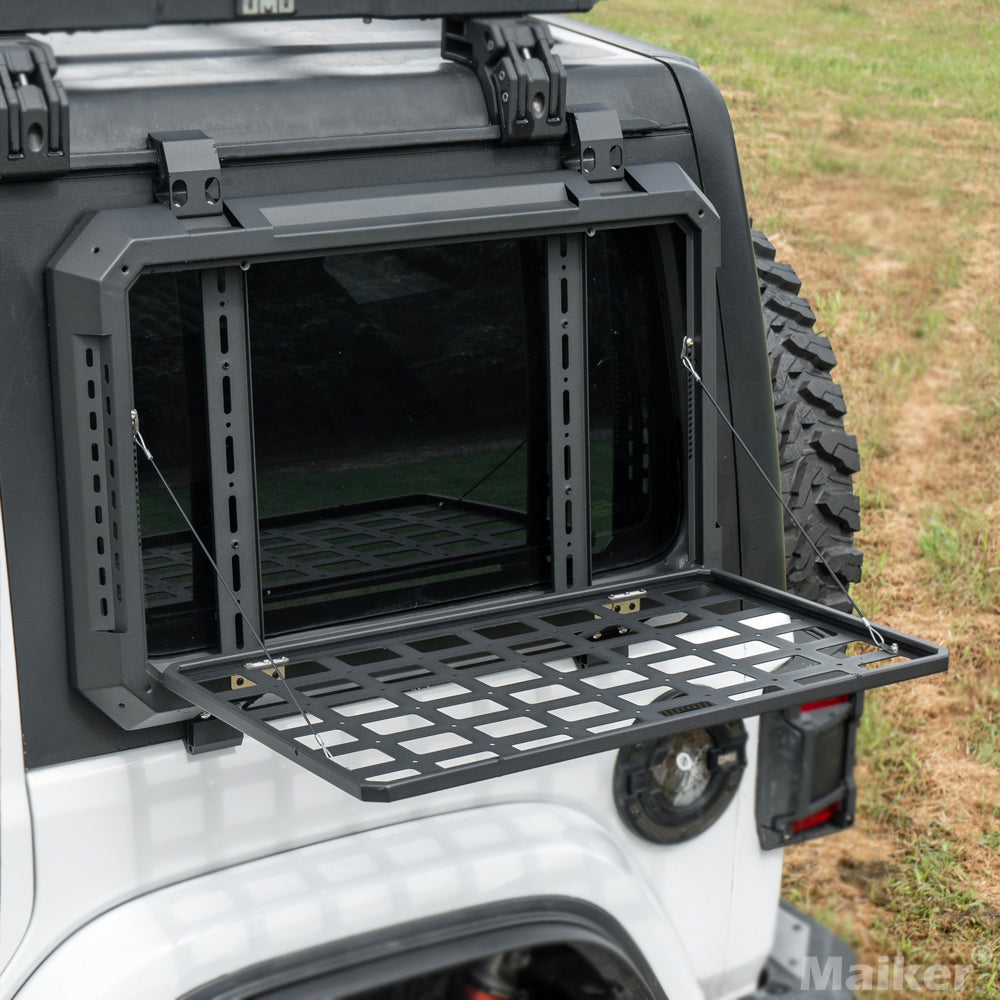
A roof rack is not the best place for every item. Some gear needs to stay visible and easy to reach from the side of the Jeep. A rear window storage panel fills this role. It gives the vehicle a side-mounted gear surface for tools, MOLLE pouches, boards, outdoor equipment, and trail accessories that should not be buried inside the cargo area.
This pairing works well because the roof rack handles bulky cargo while the side panel handles accessible gear. On trail days, drivers often need a strap, flashlight, gloves, small tool pouch, or board quickly. If those items are hidden under luggage, every stop becomes slower. A rear window panel keeps useful gear in a predictable place.
Jerrycan Kits Separate Fluids from Cargo
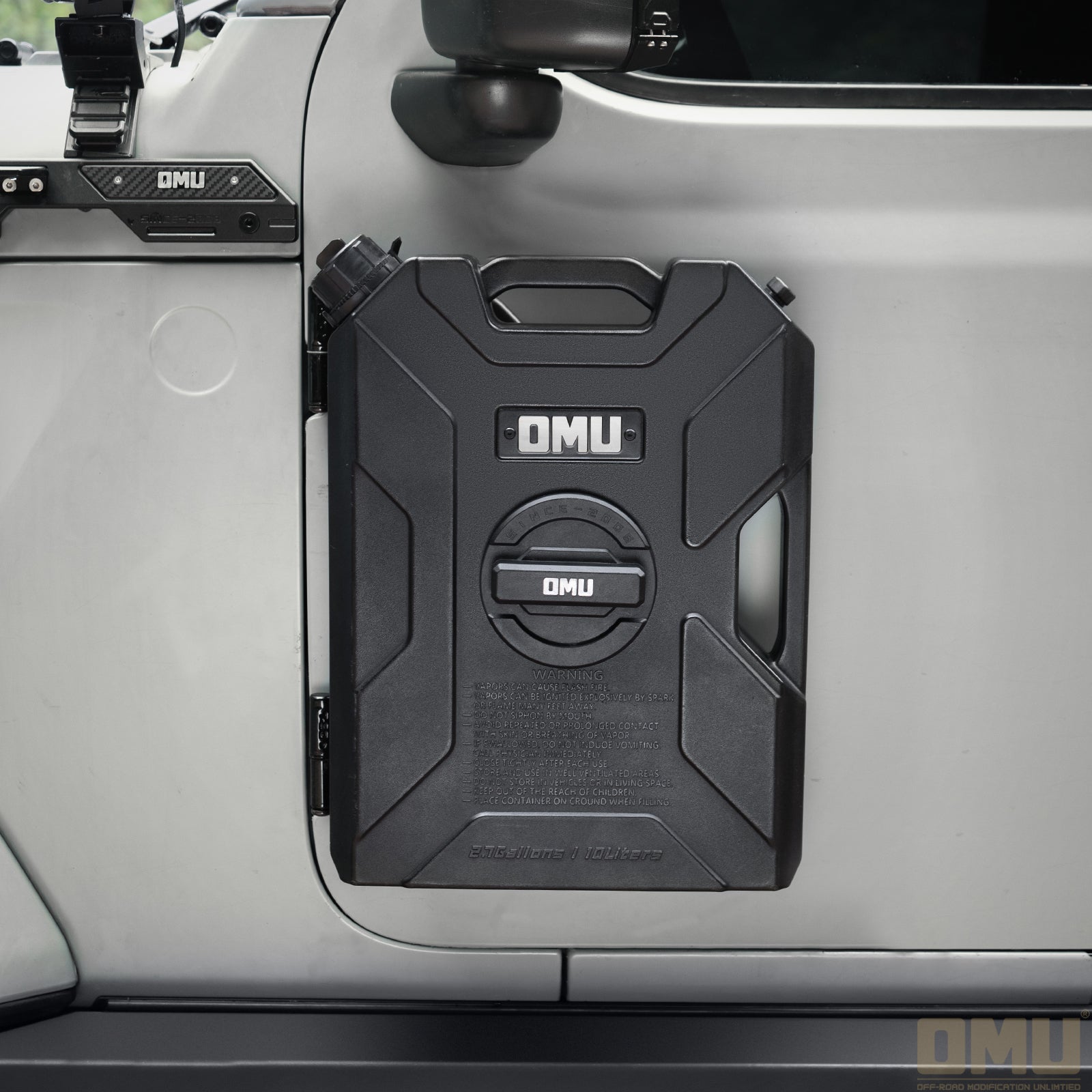
Fuel and water storage should be treated differently from normal cargo. They are useful on longer routes, but they should not be placed casually among clothing, food, electronics, or soft camping equipment. A jerrycan kit helps move fluids outside the main cargo area and keeps the cabin cleaner.
For a Jeep roof rack build, this matters because the rack should not automatically become the place for heavy fluid containers. A jerrycan kit can keep fuel or water in a dedicated exterior position, while the roof rack remains available for bulky travel gear. That creates a better weight and access balance.
Gear Pairing Guide for Jeep Roof Rack Builds
| Accessory | Role in the Build | Best Use Case |
|---|---|---|
| A-pillar light mount | Adds side-forward lighting position | Night trail driving and campsite access |
| Rear window panel | Keeps tools and gear visible from the side | Trail tools, MOLLE pouches, boards, outdoor equipment |
| Jerrycan kit | Moves fuel or water outside the cabin | Longer routes, camping, remote travel |
| Door hinge step | Improves access to roof cargo | Checking straps, loading boxes, reaching gear |
| 3-inch spotlight | Adds compact auxiliary light output | Ditch lighting and side-forward visibility |
Door Hinge Step: The Small Part That Makes the Rack Easier to Use
A roof rack becomes frustrating when it is hard to reach. A door hinge step gives the owner a quick access point for loading cargo, checking straps, reaching boxes, or adjusting gear during travel. This is especially useful when the Jeep is tall, lifted, or loaded with rooftop accessories.
Unlike a large ladder, a folding door hinge step is compact. It supports quick access without changing the whole side profile of the vehicle. For owners who want a practical but clean setup, it can be one of the most useful small accessories to pair with a roof rack.
Recovery Boards and Cargo Bags: Simple but Important
Recovery boards are one of the most natural items to carry with a roof rack. They are bulky, often dirty, and easier to keep outside the cabin. Soft cargo bags are another good match because they can hold bedding, jackets, or lightweight camping equipment without taking over the rear cargo area.
These basic items often matter more than complicated accessories. A roof rack should first solve normal packing problems. Only after that should owners add more specialized mounts or systems. The best builds are usually the ones that remain easy to pack and easy to unpack.
A Smart Jeep Roof Rack Setup Feels Organized, Not Crowded
The goal is not to attach every possible accessory to the Jeep. The goal is to make travel easier. A smart setup keeps bulky cargo on the rack, important tools visible, fuel or water separate, lights positioned for real visibility, and roof access simple. When all of these parts work together, the Jeep feels prepared without becoming chaotic.
For trail travel, this matters every time the vehicle stops. Gear can be found faster. Cargo stays cleaner. The roof rack is easier to use. The lighting works where the driver needs it. The best accessory pairing is not the most dramatic one; it is the one that saves time and reduces frustration during real trips.
Build a practical Jeep roof rack setup around trail travel →
Frequently Asked Questions
What should I pair with a Jeep roof rack?
Useful pairings include A-pillar lights, rear window storage panels, jerrycan kits, door hinge steps, recovery boards, soft cargo bags, and compact camping boxes.
Why add A-pillar lights to a roof rack build?
A-pillar lights improve side-forward visibility during night driving, trail turns, campsite access, and low-speed off-road movement. They complement the travel function of a roof rack build.
Is a rear window storage panel better than putting everything on the roof?
It is better for frequently used gear. A roof rack is useful for bulky cargo, while a rear window panel keeps tools, pouches, and outdoor items visible and easier to reach.
Should fuel or water go on a Jeep roof rack?
Fuel and water should be placed carefully because they are heavy. A dedicated jerrycan kit can be a better option because it separates fluids from the cabin and avoids placing unnecessary dense weight high on the roof.
Is a door hinge step worth adding?
Yes, if the roof rack is used regularly. A door hinge step makes it easier to reach rooftop cargo, inspect straps, and load gear without climbing awkwardly on the vehicle.
What makes a Jeep roof rack setup feel organized?
A good setup separates cargo by use. Bulky gear goes on the rack, frequently used tools stay on side storage, fluids are carried separately, and lighting is positioned for actual trail visibility.