

Jeep Overland Storage Setup: Roof Rack, Window Panel, and Jerrycan
Most Jeep owners notice the storage problem only after the vehicle is already packed. Recovery boards are on the floor, tools are buried under camping bags, water containers are taking up passenger space, and the item needed first is usually the hardest one to reach. On a short weekend drive, this may only feel inconvenient. On a longer trail route, poor storage can slow every stop.
A practical Jeep overland setup should make gear easier to carry, easier to reach, and easier to separate by use. A roof rack, rear window storage panel, jerrycan kit, and door hinge step all solve different problems. The roof rack handles larger outdoor gear. The rear window panel keeps useful tools visible from the side of the vehicle. The jerrycan kit moves fuel or water outside the cabin. The door hinge step makes roof access more convenient when the vehicle is fully loaded.
This guide explains how these accessories work together on Jeep Wrangler JL and Gladiator JT builds, and how to plan a storage layout that feels useful in real overland driving rather than simply adding more parts to the vehicle.
Think in Storage Zones, Not Single Accessories
A common mistake in Jeep builds is treating every accessory as a separate upgrade. A roof rack is bought first, then a storage panel, then a fuel carrier, then a step. The result may look complete, but the gear layout can still feel messy if each part does not have a clear role.
A better approach is to divide the vehicle into storage zones. The roof is best for bulky but manageable cargo. The side window area is useful for tools, boards, pouches, and outdoor gear that should be visible from outside the vehicle. The door or rear exterior area can carry fluid containers. The rear cabin should be kept for items that need protection from weather, dust, or theft.
| Storage Position | Best Gear Type | Why It Works |
|---|---|---|
| Roof rack | Recovery boards, camping boxes, soft bags, awnings | Keeps bulky cargo outside the cabin |
| Rear window panel | Tools, MOLLE pouches, outdoor gear, traction boards | Gives side access without unloading the rear cargo area |
| Jerrycan kit | Fuel or water storage | Separates fluids from soft luggage and cabin cargo |
| Door hinge step | Access support | Makes rooftop cargo easier to reach and inspect |
The Roof Rack Should Carry the Right Kind of Gear
A roof rack adds visible capability to a Jeep, but it should not become the place for every heavy item. The roof is best for larger gear that takes up too much space inside but does not create excessive top weight. Recovery boards, lightweight camping boxes, awnings, soft storage bags, and outdoor equipment usually make more sense than dense toolboxes or heavy fluid containers.
For Jeep Wrangler JL owners, this extra upper storage is especially helpful because interior cargo space can fill quickly. For Gladiator JT owners, the roof rack can work with bed storage to create a more flexible travel setup. The key is to keep the vehicle balanced. Bulky gear can go high, while dense gear should stay lower whenever possible.
FEATURED PRODUCTS

Why Side Access Matters on the Trail
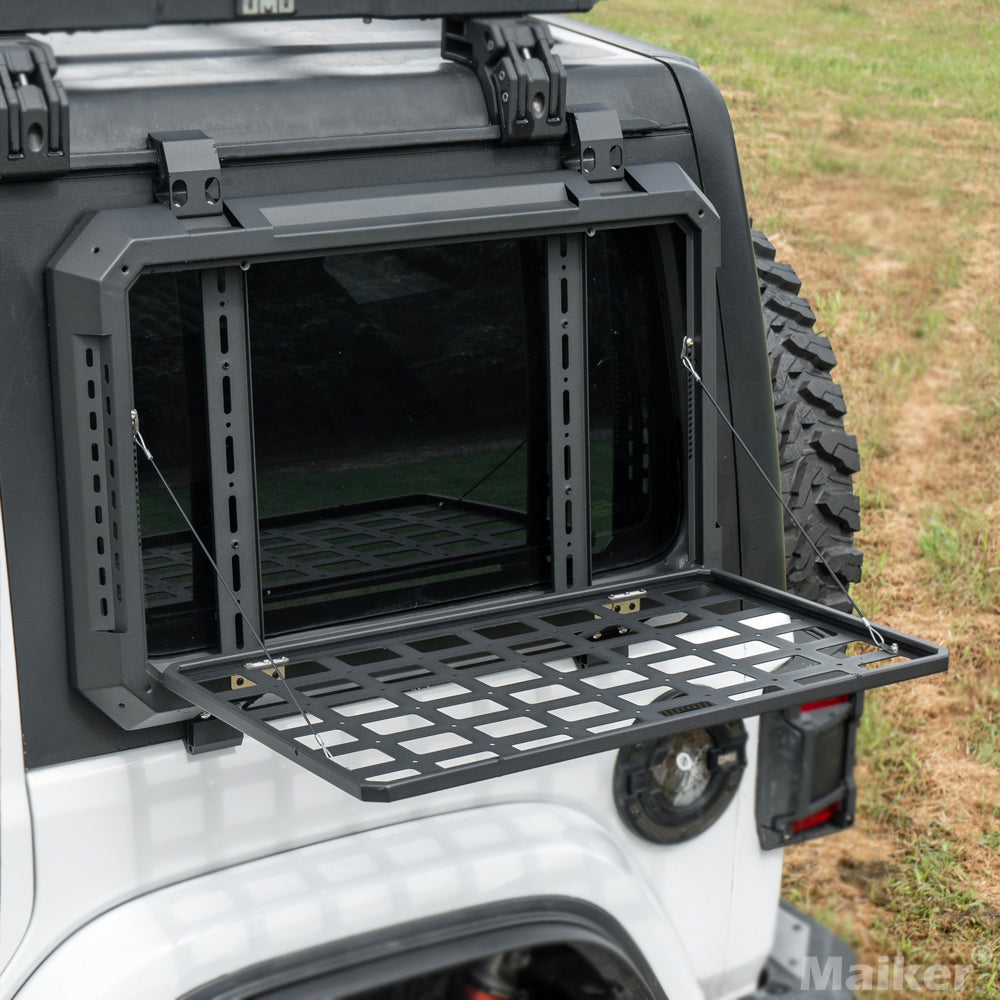
Side access becomes valuable every time the Jeep stops. A rear window storage panel lets frequently used gear sit outside the main cargo stack. Instead of opening the tailgate and moving bags around, the driver can reach tools, boards, or pouches from the side of the vehicle. This is especially useful when the rear cargo area is full or when the vehicle is parked close to a tent, trailer, or another vehicle.
An openable rear window panel can also act as a small work surface. During camping, repair, cooking preparation, or gear sorting, this extra flat area can save time. It keeps small items off the ground and gives the vehicle a more functional outdoor workspace.
Keep Fuel and Water Outside the Soft Cargo Area
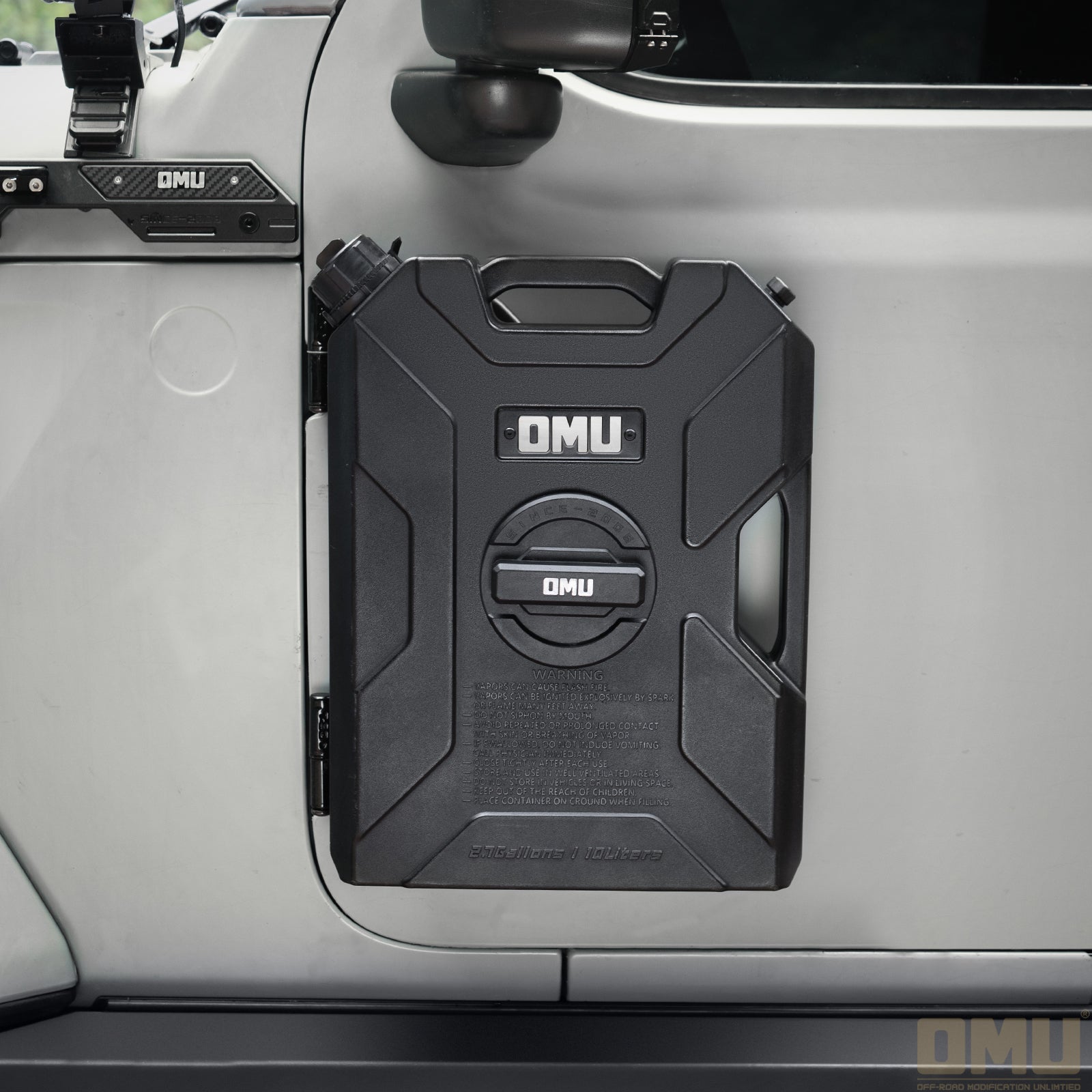
Fuel and water storage should be planned carefully. Both are necessary for longer routes, but neither should be casually placed among clothing, electronics, or soft camping bags. Exterior jerrycan kits help keep fluid storage separate and easier to manage. They also free interior space for items that need protection from dust and weather.
The goal is not to carry more weight for the sake of it. The goal is controlled storage. A jerrycan kit should be easy to access, securely mounted, and positioned so it does not interfere with doors, visibility, or other accessories.
FEATURED PRODUCTS

Small Accessory, Big Difference: The Door Hinge Step
A roof rack is only useful if the owner can reach it. A door hinge step gives the driver a quick foothold for checking straps, accessing storage boxes, adjusting gear, or loading lighter cargo. It is a small accessory, but it changes how convenient the whole roof storage system feels.
This matters most during repeated use. On a long trip, cargo is not loaded once and forgotten. It may need to be checked at fuel stops, tightened after rough roads, opened at camp, or adjusted before rain. Easy access helps the roof rack become a practical cargo platform rather than a difficult-to-use exterior shelf.
A Better Layout for Real Jeep Travel
The strongest overland storage setup does not place everything in one area. It spreads cargo by weight, access frequency, and use case. Bulky gear can go on the roof. Tools and pouches can move to the side panel. Fluids can sit in an exterior jerrycan position. The door hinge step helps connect the driver to the roof rack without climbing awkwardly on tires or door frames.
For weekend camping, mountain routes, desert drives, or trail recovery days, this kind of layout saves time every time the vehicle stops. The best storage setup is not the one that carries the most gear. It is the one that helps the driver find the right gear without unpacking the whole Jeep.
Build your Jeep storage setup around the OMU Genesis roof rack →
Frequently Asked Questions
What is the best storage setup for a Jeep overland build?
The best setup distributes cargo across several zones. A roof rack can carry bulky gear, a rear window panel can hold tools and outdoor equipment, and exterior jerrycan kits can separate fuel or water from the cabin.
Should heavy gear go on a Jeep roof rack?
Heavy gear should be placed carefully. Bulky and lighter items are usually better for roof storage, while dense tools, water, and recovery equipment are often better kept lower in the vehicle for stability.
What can a Jeep rear window storage panel carry?
A rear window storage panel can carry items such as traction boards, MOLLE bags, outdoor tools, shovels, off-road gear, and camping accessories depending on the mounting setup.